Mobility of Young People – Izmir, Turkey
27 April – 1 May 2026
The youth exchange “Green Future: Youth Workers for Sustainable Technologies” focused on one of the most pressing challenges of our time – sustainability and environmental responsibility. By bringing together participants from different countries and cultural backgrounds, the project created a dynamic platform for sharing ideas, exploring ecological issues, and developing practical approaches toward a more sustainable future.
Through a combination of interactive workshops, creative activities, and field visits, participants had the opportunity to deepen their understanding of environmental challenges such as food waste, resource management, and sustainable lifestyles. The exchange encouraged active participation, critical thinking, and collaboration, while also fostering intercultural dialogue and mutual learning.
The project brought together participants from Serbia, Greece, Romania, Bulgaria, and Turkey, forming a diverse and motivated group, while also contributing to international cooperation and intercultural dialogue within the Balkan region. This multicultural environment enriched every activity, allowing participants to exchange perspectives, compare practices from their home countries, and build meaningful international connections.
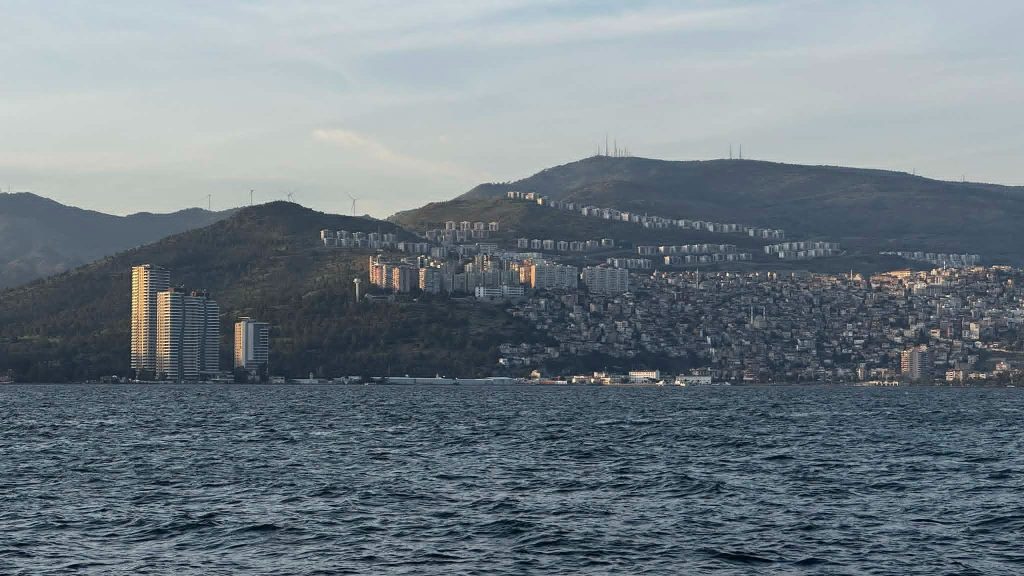
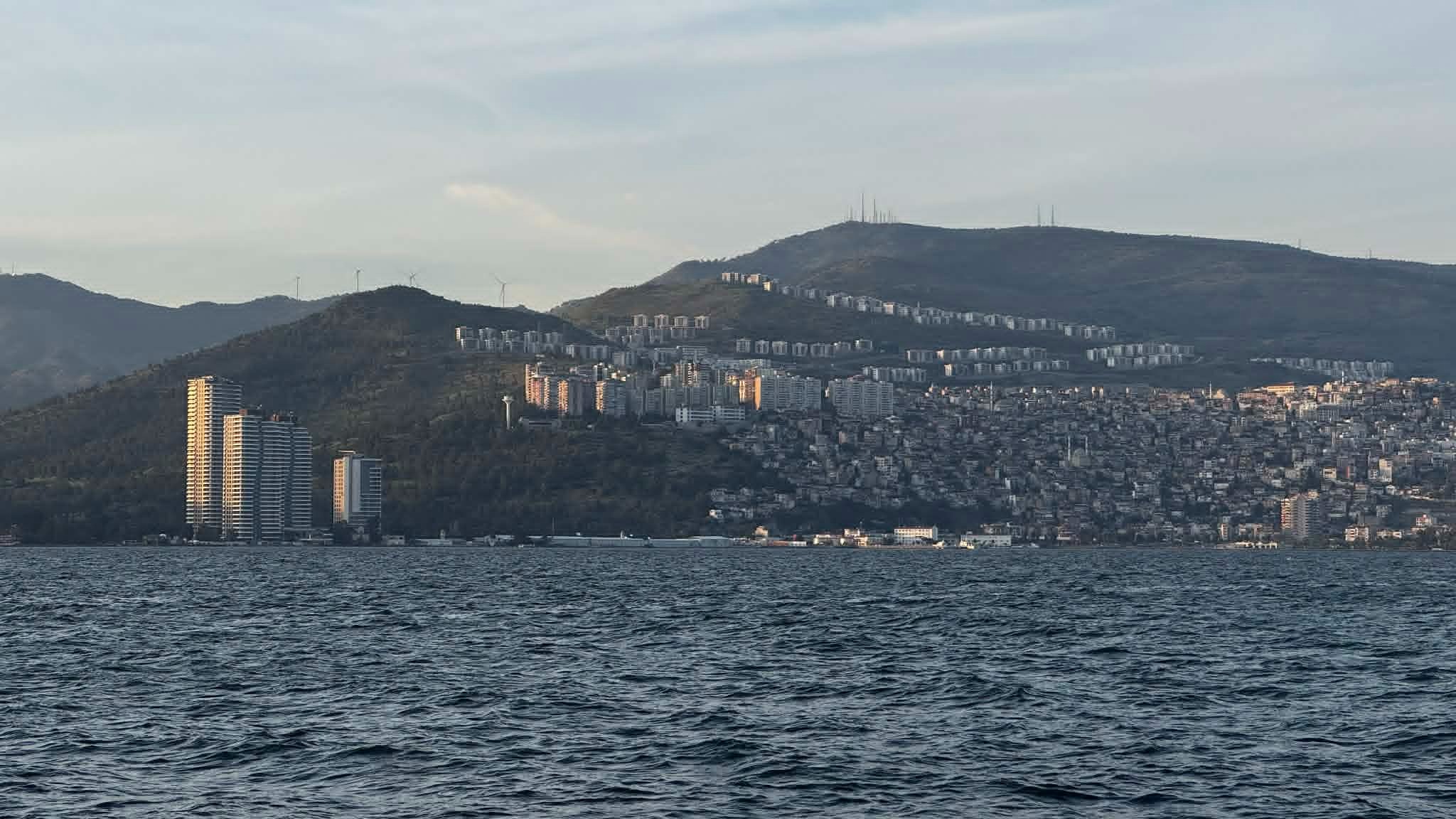
The program took place in Izmir – a vibrant coastal city with a rich historical and cultural heritage. Throughout the exchange, participants explored both the modern and historical dimensions of the city, which added depth to the learning experience and provided a broader context for understanding sustainability within urban environments.
Day 1
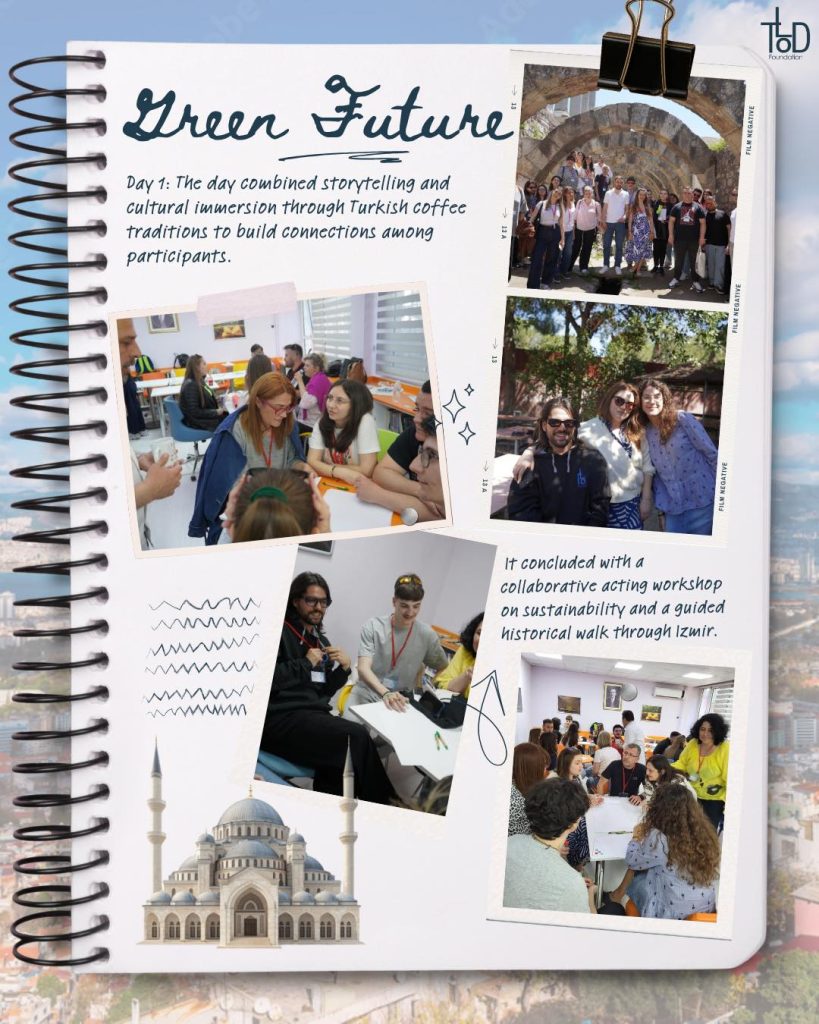
The first day focused on building connections and creating a positive group dynamic. Through creative storytelling activity, participants introduced themselves by sharing their personal journeys to Izmir. This approach helped break the ice and quickly established a sense of openness and trust within the group, while also setting the group dynamics.
Later, participants took part in a cultural activity centered around traditional Turkish coffee and fortune-telling. This informal experience encouraged spontaneous interaction and offered a first glimpse into local customs.
With the next activity the program shifted toward teamwork and creativity with an acting workshop on the theme of a “Green Future.” Participants worked in multinational teams, developing their own environmental concepts and presenting them through short theatrical performances. The activity encouraged collaboration, imagination, and reflection on ecological challenges.
The day concluded with a guided city walk and visit to the Agora of Smyrna, allowing participants to explore Izmir’s ancient and contemporary atmosphere while continuing to build connections in a relaxed setting.
Day 2
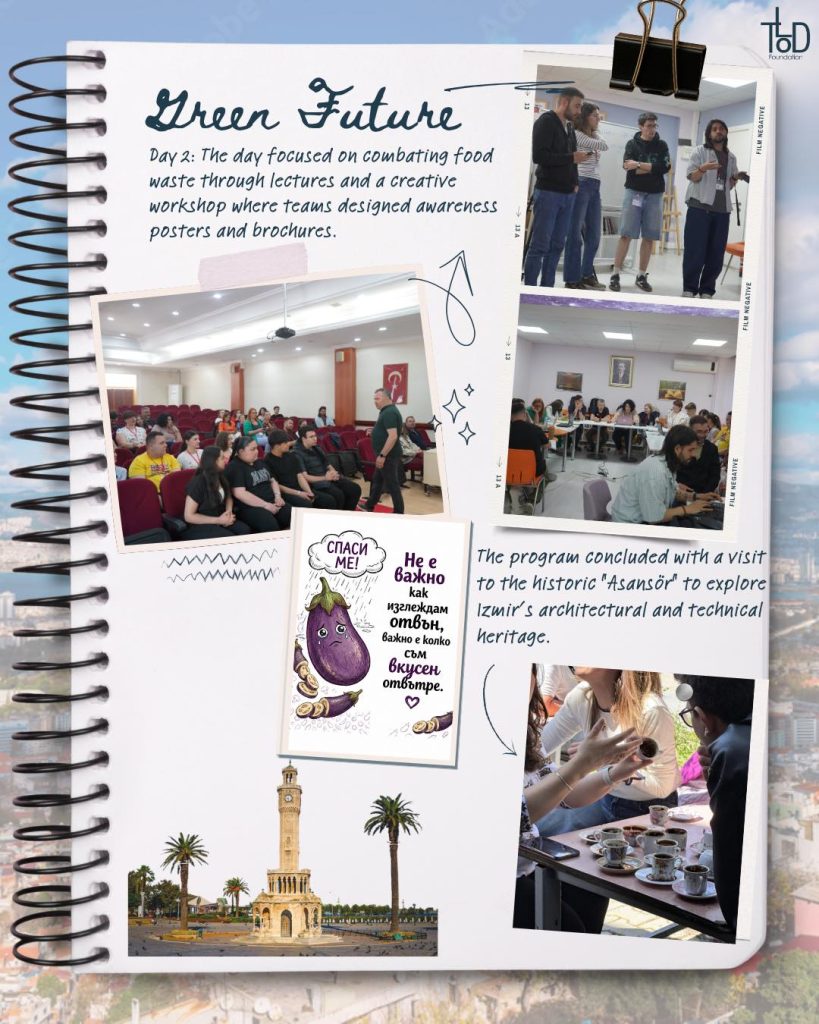
The second day focused on the issue of food waste and sustainable consumption. The morning session included a presentation and discussion on practical strategies to reduce food waste, highlighting examples such as social kitchens that utilize imperfect products.
Participants then worked in teams to create posters and brochures that communicated their ideas and solutions. This process combined creativity with critical thinking, as each group developed a clear message and visual concept. After finalizing their projects, teams presented their work, showcasing different perspectives on the issue. Despite their varied approaches, all groups emphasized the importance of reducing food waste and its connection to broader environmental and social challenges.
The day ended with a cultural visit to one of Izmir’s most iconic landmarks – the historic Asansör, offering participants a deeper understanding of the city’s development and heritage.
Day 3
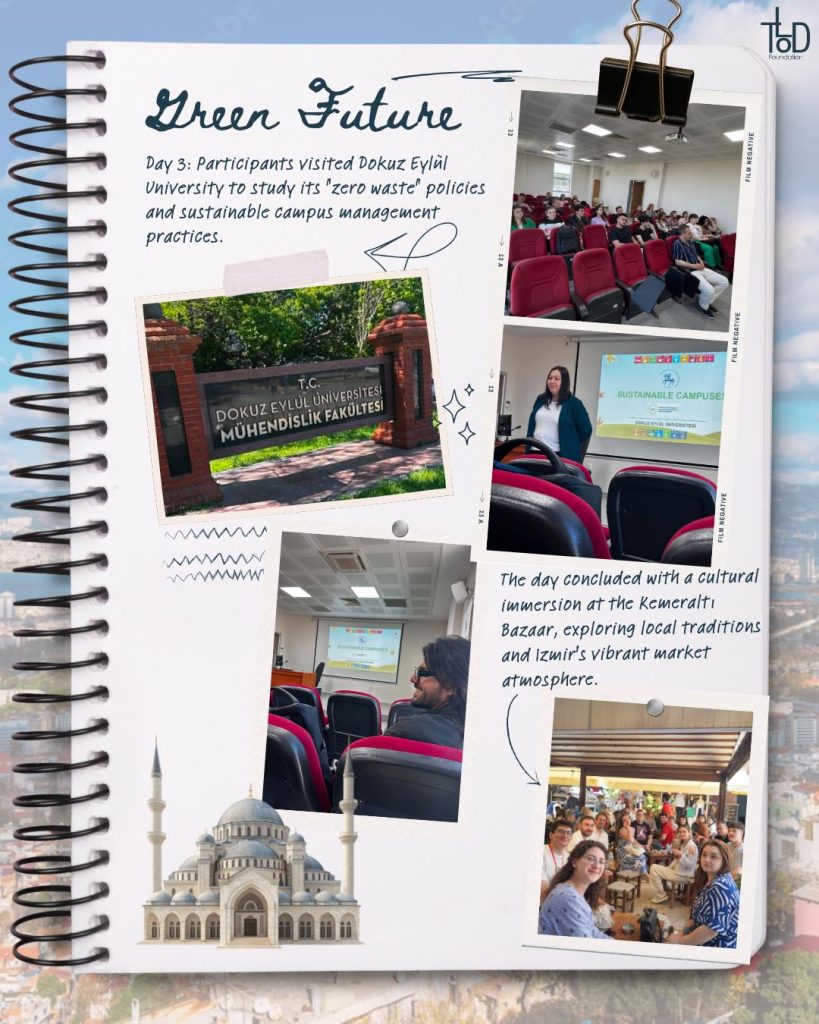
The third day began with a visit to Dokuz Eylül University, where participants learned about the institution’s “zero waste” policies and sustainable practices. The presentation covered topics such as recycling systems, composting, reducing paper consumption, and awareness-raising campaigns.
This experience provided a practical example of how sustainability can be implemented on a large scale and highlighted both the opportunities and challenges of waste management. The event stimulated discussions on the given examples and practices and contributed to the usefulness of the project.
After returning to the city, participants had time to explore the Kemeraltı Bazaar. This visit offered insight into local culture and everyday life, while also creating space for informal interaction and cultural exchange.
Day 4
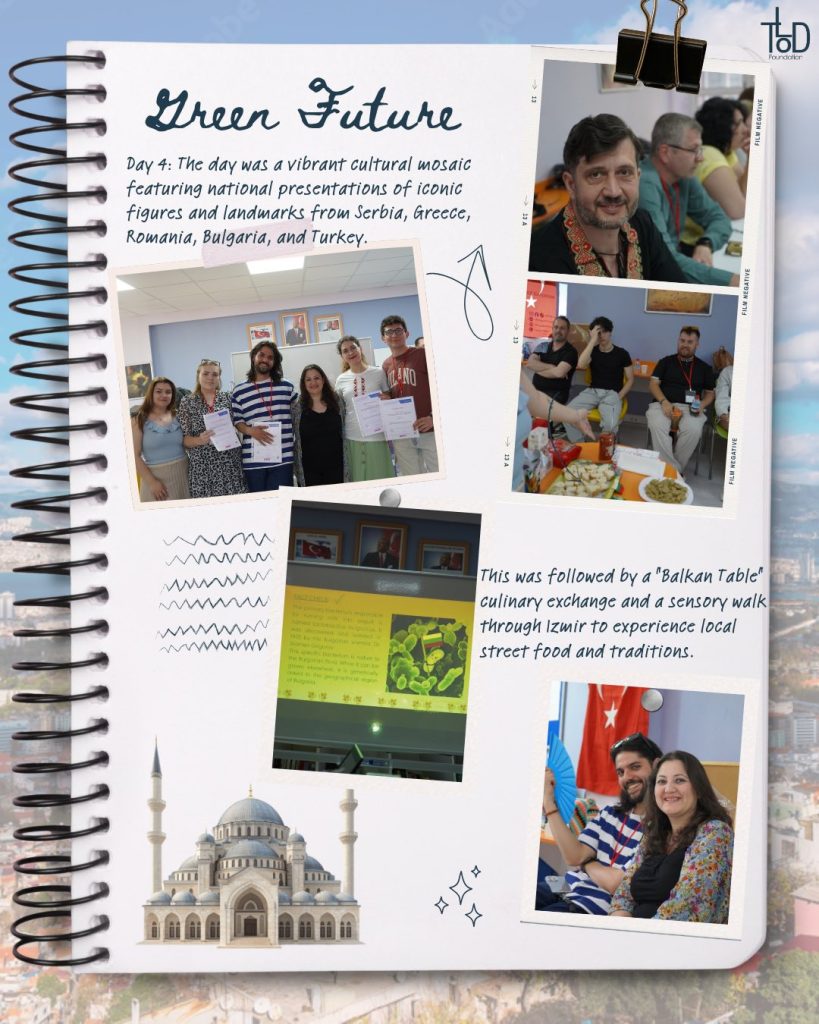
The fourth day was dedicated to intercultural dialogue and cultural exchange. During the cultural exchange activity each country presented its traditions, notable figures, and cultural heritage through music, stories, and visual materials. Participants discovered both the uniqueness of each culture and the shared elements that connect them, particularly within the Balkan region.
The experience continued with a culinary activity known as the “Balkan Table,” where each country presented traditional foods. This tasting session highlighted cultural diversity while also revealing surprising similarities, reinforcing the idea that shared traditions can bring people closer together.
The afternoon was spent exploring the city in a more informal way, allowing participants to experience the everyday life of Izmir and strengthen their connections through shared moments.
Day 5
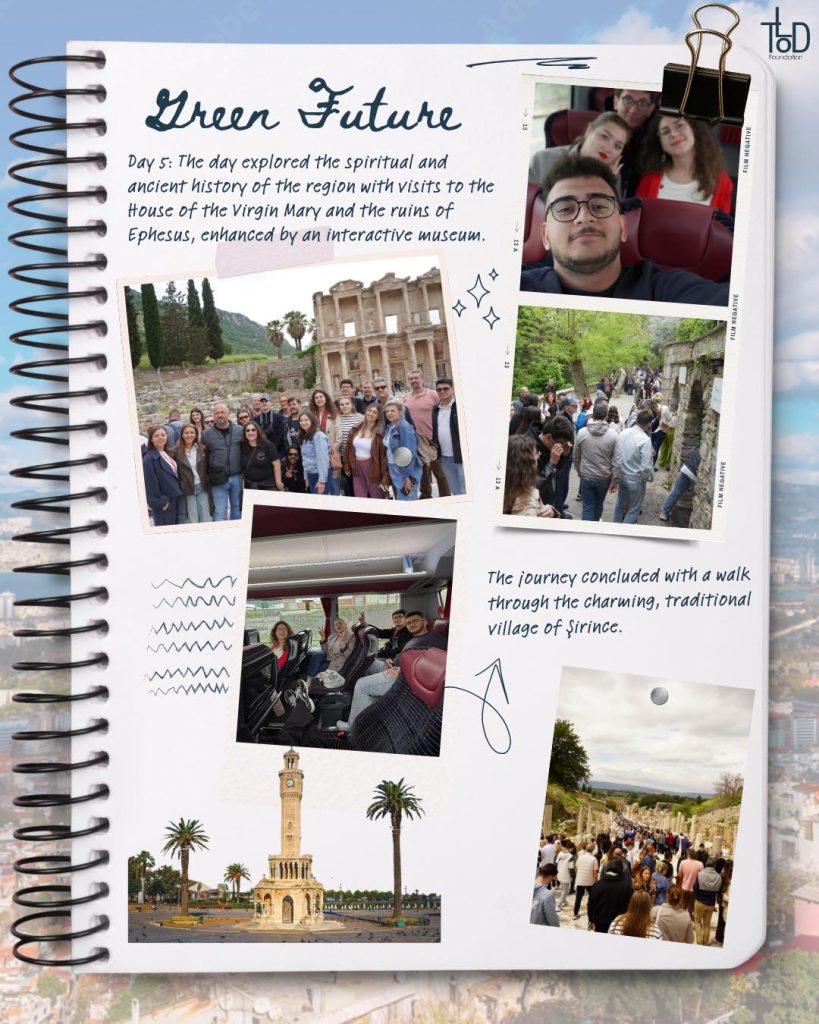
The final day combined cultural exploration with self reflection. Participants visited the House of the Virgin Mary, a place of historical and spiritual significance, followed by a tour of the ancient city of Ephesus and an interactive museum. Walking through the ruins, listening to the tourist guide and engaging with immersive exhibitions provided a deeper understanding of the region’s history and cultural legacy.
The program concluded with a visit to the village of Şirince, famous for its fruit wine production and traditional athmosphere. This final activity offered a moment to reflect on the entire journey in an authentic setting.
Conclusion
The youth exchange “Green Future: Youth Workers for Sustainable Technologies” provided a meaningful and multifaceted learning experience that combined environmental education, cultural exploration, and personal development.
Throughout the program, participants developed a deeper awareness of sustainability challenges and explored practical ways to address them. At the same time, they strengthened essential skills such as teamwork, communication, and creative problem-solving.
Equally important were the intercultural connections formed during the exchange. By sharing experiences, traditions, and perspectives, participants built a strong sense of community and mutual understanding. Participants felt the hospitable culture of Izmir and created strong connections which developed into spontaneous friendly conversations which will surely last even after the conclusion of the project.
By the end of the week, participants left not only with new knowledge, but also with motivation and inspiration to promote sustainable practices in their own communities and friendship in an intercultural environment. The experience demonstrated that collaboration, mutual understanding, openness, and shared responsibility are key elements in building a greener and more sustainable future.